Coding toys for toddlers do not teach programming. They build the skills that come before it: putting actions in order, seeing that one action causes another, spotting patterns, and starting to think in if-then terms.
Screen-free toys such as simple floor robots, sequence blocks, and train tracks all practice these at toddler level.
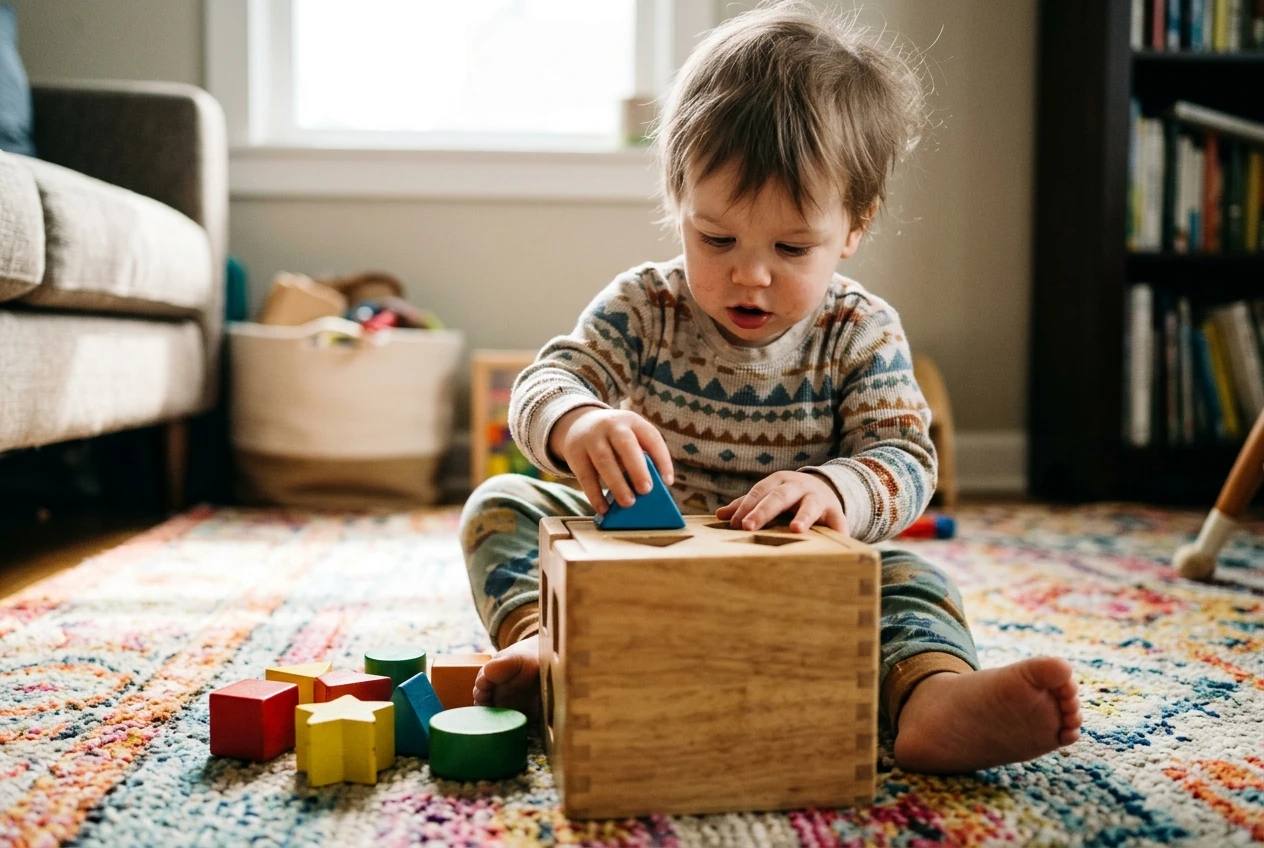
What Does Logical Thinking Look Like in a Toddler?
In a toddler, logical thinking shows up as small, repeated experiments. A child who drops a spoon from the high chair again and again is testing what happens when she lets go, and she is learning that the result is the same each time.
That is the root of every later coding idea.
Four pre-coding skills are worth knowing, because each one points toward a different kind of toy:
- Sequencing: doing things in a set order, such as putting the block in the bucket, then tipping the bucket out. The order changes the result.
- Cause and effect: knowing that pressing, pushing, or pulling something makes something else happen.
- Patterns: noticing that things repeat, such as red, blue, red, blue, and eventually predicting what comes next.
- If-then thinking: connecting a condition to an action, such as “if the block is round, it goes in the round hole.”
Toddlers between about 18 months and 3 years are at different points on each of these. Most are strong on cause and effect first, then sequencing, with patterns and if-then thinking arriving later and unevenly.
A toy that matches the skill your child is working on will hold attention longer than one aimed at a skill that is still out of reach.
Can Toddlers Really Use Coding Toys?
Toddlers can use simplified versions of coding toys, but they will use them differently than the packaging suggests.
Many toys sold as coding toys are labeled for ages three and up, because programming a toy to run a path in advance requires holding a plan in mind. Most children under three cannot do that yet.
What they can do is press one button and watch what happens, or snap two pieces together and see the toy respond. That is still useful. It is the same cause-and-effect and ordering practice, just without the planning step.
So the useful question is not whether your toddler can “code.” It is whether the toy lets them practice one of the four skills above in a way they can actually manage.
If a toy needs a child to plan five moves ahead, it will end up on a shelf. If it responds to one or two actions, it can be played with for months.
Which screen-free toy types build sequencing and cause and effect?
Several ordinary toy types build these skills, and they are grouped below by the skill each one practices most directly.

Toys that build sequencing
Sequencing toys make the order of actions matter. Stacking rings only work one way, nesting cups need to go from biggest to smallest, and picture cards showing “first this, then that” give an adult something to talk through with the child.
Train track is one of the best sequencing games available. A child lays pieces in an order, runs the train along them, and sees at once if a piece is missing or in the wrong spot.
If you are weighing up sets, the guide to choosing a wooden train table set covers what to look for in a layout that can grow with your child.
Toys that Build Cause and Effect
Ball ramps, pop-up toys, pull-back vehicles, and drop-and-roll towers all reward one action with one clear result. The best ones respond immediately and the same way every time. That consistency is what lets a toddler form the idea “when I do this, that happens.”
Toys with a delayed or unpredictable response are less useful at this age. If a button press produces a result several seconds later, a young toddler often does not connect the two.
Toys that Build Patterns
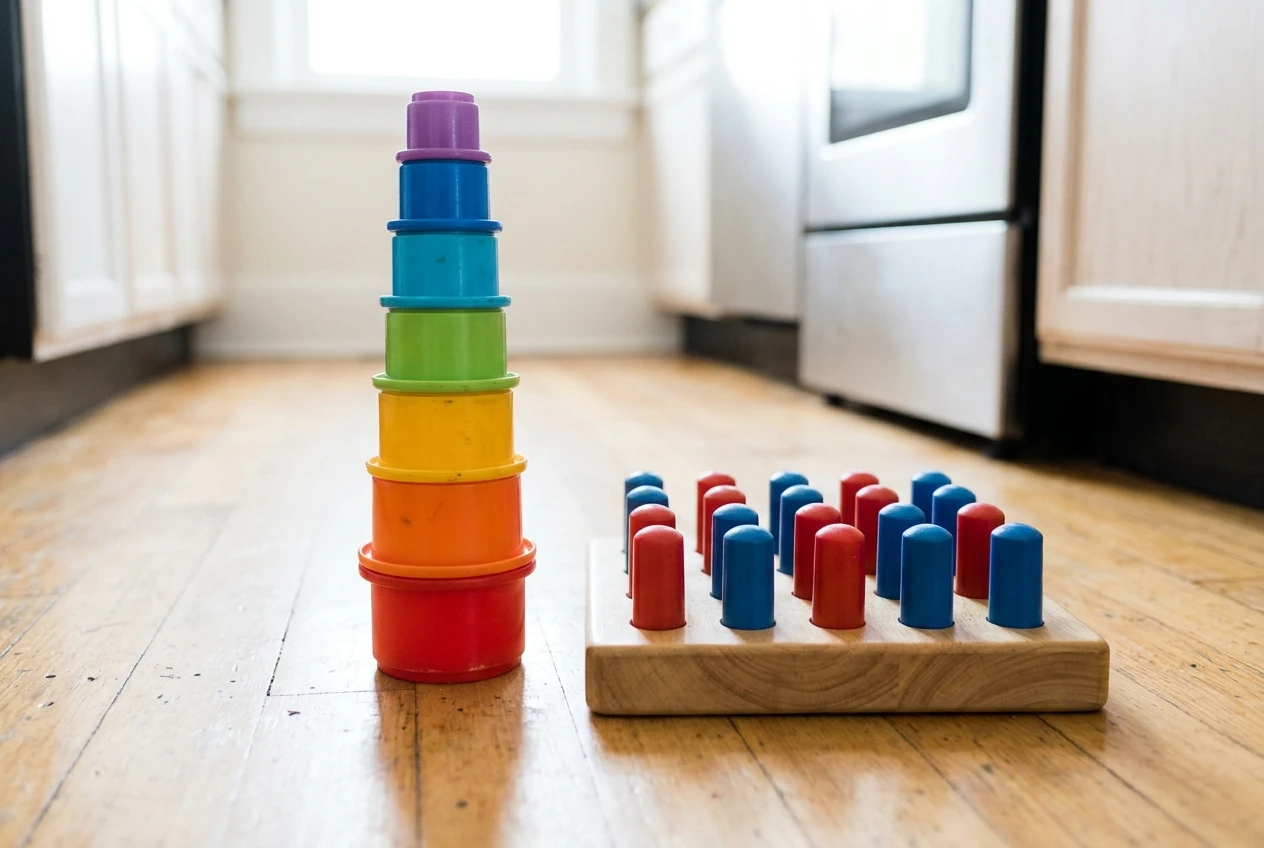
Large beads on a string, pegs on a board, and colored stacking pieces all invite patterns. At first a toddler will simply put things on in any order. Around the age of two to three, many children start copying a simple two-color pattern you start for them, and later continue it on their own.
Toys that Build If-Then Thinking
Shape sorters and simple sorting games are the earliest form of if-then logic. If the piece is a triangle, then it fits the triangle opening. Matching games, where a child pairs identical pictures or colors, work the same way. You can extend this with spoken rules in everyday play: “If the train reaches the tunnel, it goes through.”
Block-based toys are generally easier for toddlers than button-programmed floor toys, because the sequence is something a child can see and handle. The two types practice the same idea in different ways, so the comparison helps you decide which to try first.
Button-programmed floor toys usually have arrow buttons or a few command buttons. The child (or an adult) presses a series of commands, and the toy then carries them out. This teaches that instructions run in order. The difficulty for toddlers is the gap between pressing and seeing the result, and the need to remember what was entered.
Block-based or tile-based toys use physical pieces that are placed in a row. Each piece stands for an action, and the toy or the adult reads the row from start to finish. The sequence stays visible, a child can swap or remove a piece, and mistakes are easy to see and fix. For a child under three, that physical, rearrangeable quality usually matters more than any extra features.
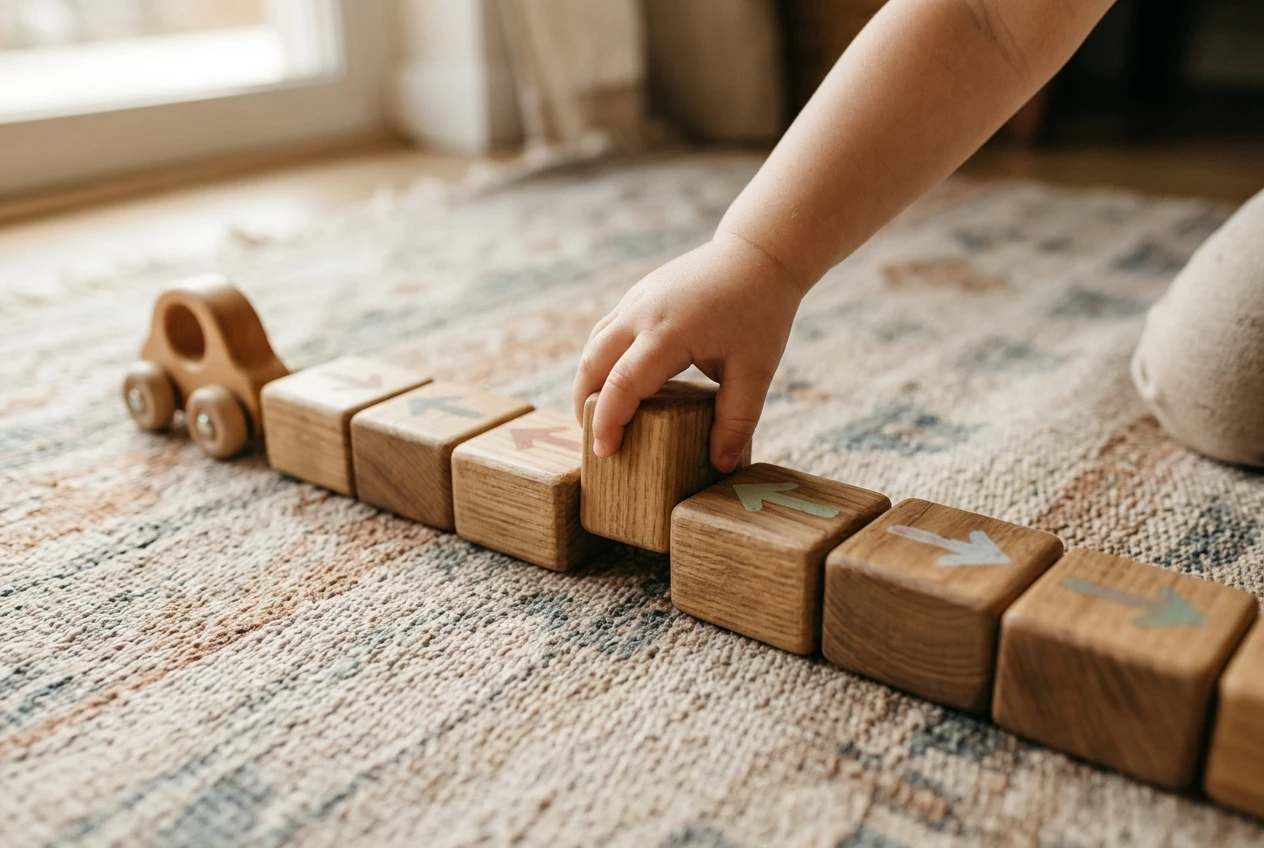
A reasonable path is to begin with simple cause-and-effect toys and ordinary blocks, move to tile-based sequencing with an adult helping, and treat button-programmed toys as something for the later end of this age range or just after it. Our piece on safe interactive educational toys for toddlers is a good companion for judging which interactive features suit very young children.
How Do You Play with A Coding Toy so it Builds Logic?
You build logic by talking through what the toy does and letting your child predict and adjust, rather than by explaining the rules up front. The toy provides the material, and your commentary turns it into thinking practice. A simple routine works with almost any of the toys above:
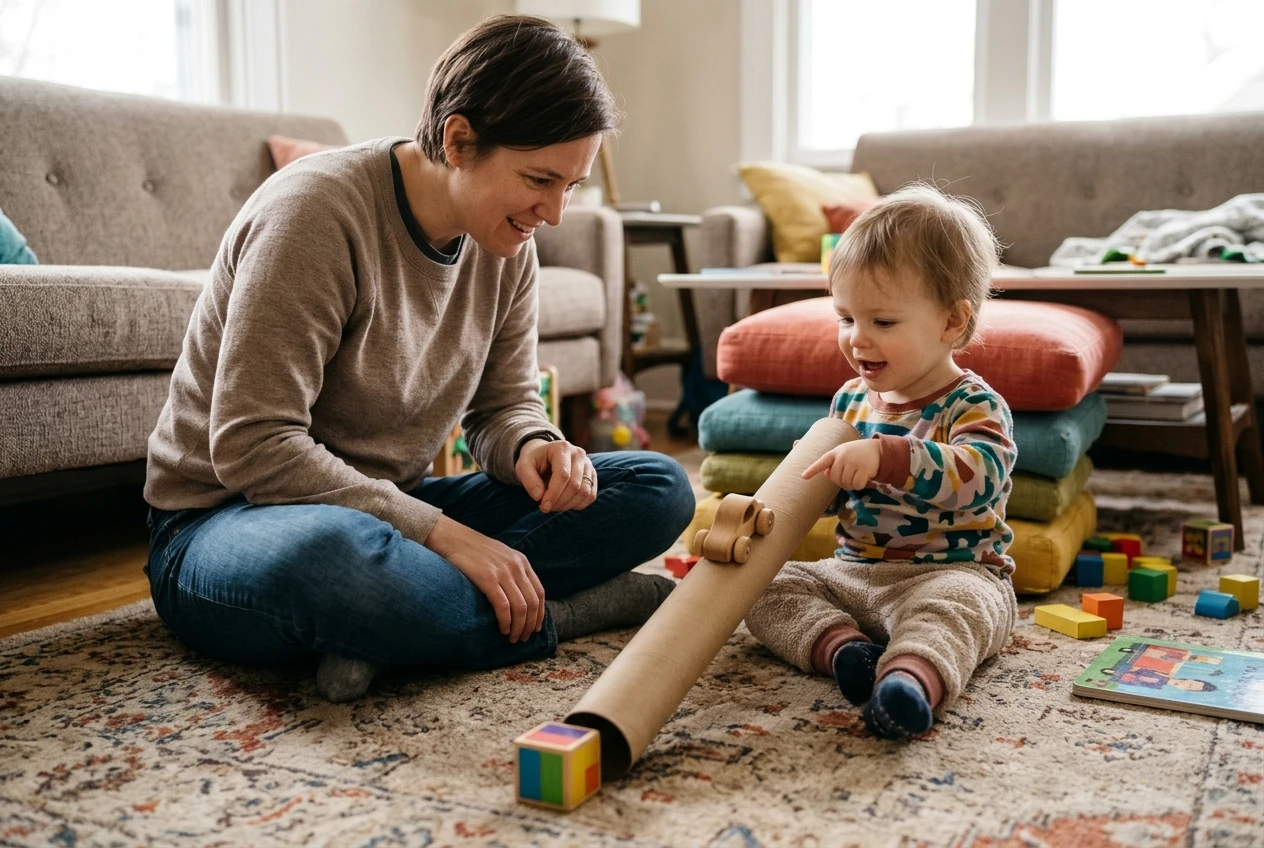
- Start with one action. Let your child press, push, or place one piece and watch the result. Say what happened in a few words: “You pushed it, and it rolled.”
- Add a second action. Once one action is familiar, add another after it. “First the car goes down the ramp, then it hits the block.”
- Ask for a prediction. Before the next try, ask “What will happen?” A pointed finger or a guess counts as an answer.
- Let the wrong order happen. If the pieces are out of order, run it anyway. Seeing the result of a mistake teaches more than being corrected in advance.
- Change one thing. Swap two pieces or move a track section, then run it again and compare. This is the earliest form of debugging.
- Swap roles. Let your child give the instructions while you carry them out, even if the instructions are silly.
Keep sessions short, since a toddler’s attention for any one game is brief. Five minutes of focused play that ends while your child still wants more is better than a long session that ends in frustration.
What Should You Check Before Buying For This Age?
Check the age label, the small parts, the batteries, and whether the toy needs a screen. The age label deserves the most weight, because manufacturers set it with safety testing in mind, not only difficulty.
- Age label and small parts: Toys for children under three should not have pieces that fit inside a choking-hazard tester or can break off. If a coding toy is labeled for three and up, it may include small parts that are unsuitable for a younger child, even if the activity looks simple.
- Battery compartment: Choose toys where the battery door is closed with a screw. Loose batteries, and button batteries in particular, are a serious hazard for young children.
- App or screen requirements: Some toys marketed as screen-free still need a phone or tablet for setup or for some features. Read the description and the reviews to find out what is actually required.
- Few, clear controls: A toddler can manage one to three obvious actions. A toy with many buttons or modes is more likely to be ignored or to frustrate them.
- Sturdiness: Toddlers throw, chew, and stand on toys. Rounded edges and solid construction matter more than extra features.
- Room to grow: Pieces that can be used in more than one way, like track, blocks, and cards, tend to stay interesting longer than a toy with a single trick.
It also helps to ask whether a toy will actually be played with. A guide on picking STEM toys for a preschooler without buying more pieces they ignore walks through that question in more detail, and the same thinking applies to coding toys.
Which Everyday Toys Already Teach Coding Skills?
Many toys and routines you probably already have teach the same skills as a dedicated coding toy. If you are not ready to buy anything, these are worth using more deliberately:
- Shape sorters and puzzles: these practice if-then matching and trial and error.
- Stacking cups and nesting boxes: these teach ordering by size and the idea that sequence affects the result.
- Wooden trains and track: laying out a route, running it, and rebuilding it is sequencing and debugging in a form toddlers enjoy. The article on why wooden train sets are beneficial for toddlers goes into what children get out of this kind of play.
- Play kitchens: “First we stir, then we pour” is a sequence a toddler can act out and repeat.
- Songs with actions: songs that repeat verses and movements teach patterns and order without any equipment.
- Daily routines: talking through “socks first, then shoes” or “wash hands, then eat” gives sequencing practice many times a day.
- Ball and ramp play: a cardboard tube or a tilted tray is enough to explore cause and effect.
The common thread is repetition with small changes. A toddler learns a rule by seeing it hold across many tries, then seeing what happens when one thing is different.
How Do The Toy Types Match Up By Skill and Age?
This table matches each toy type to the main skill it builds and a rough age range. Ages are approximate, since children develop at different speeds and the manufacturer’s age label should always take priority.
| Toy Type | Main Skill It Builds | Rough Age to Start |
|---|---|---|
| Stacking rings and nesting cups | Sequencing (order by size) | About 12 to 18 months |
| Ball ramps and pop-up toys | Cause and effect | About 12 to 24 months |
| Shape sorters and simple puzzles | If-then thinking | About 18 months to 2 years |
| Wooden train track | Sequencing and trial and error | About 2 years, with an adult helping |
| Large beads and pegboards | Patterns | About 2 to 3 years |
| Picture sequence cards | Sequencing (first, then) | About 2.5 to 3 years |
| Block-based or tile-based coding toys | Sequencing and early debugging | About 3 years, with an adult helping |
| Button-programmed floor toys | Sequencing and planning ahead | About 3 years and up, check the label |