Most shelves of preschool toys hold a few favorites and a lot of things that were played with twice. The toys that get used are usually the ones that fit what the child is already doing: stacking, sorting, pouring, building, and pressing things to see what happens.
This guide shows how to find the best STEM toys for preschoolers by starting from those habits, sorted by the skill each toy practices: science, technology, engineering and math.
It also gives you a short checklist you can run on any toy, whether it is on a shop shelf, in an online listing or on a gift list from a relative.
What STEM Actually Looks Like In A 3 to 5 Year Old
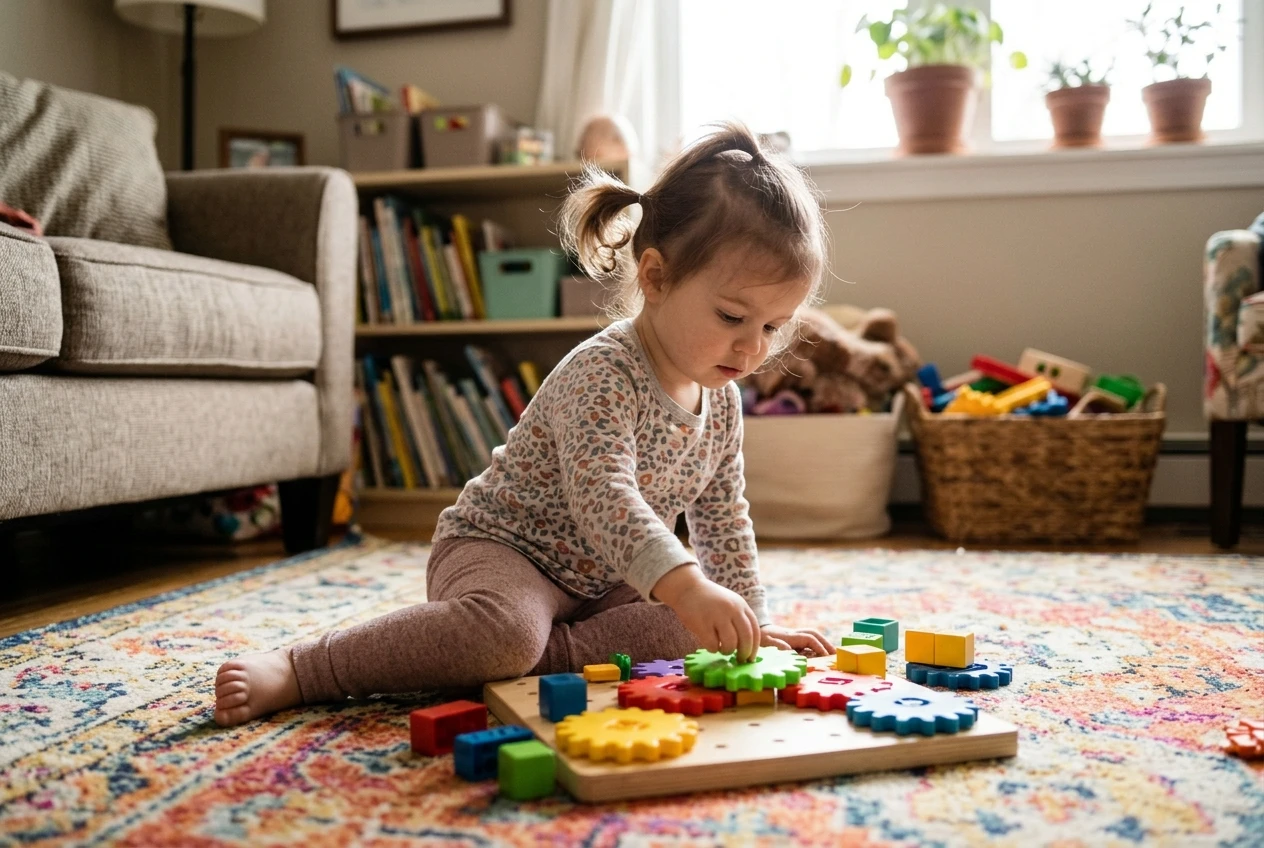
At this age, STEM is not coding or formulas. It is a child noticing that something happens, asking why, and trying it again with a small change. A four-year-old who pours water into three containers of different sizes and watches which one overflows is doing early science and early math together.
A few behaviors to look for at home:
- Stacking and knocking down. The child is testing balance and height, and finding out what a tower can hold before it falls.
- Sorting. Buttons, blocks, socks or toy animals get put into groups by color, size or shape. This is the start of classifying, which underlies both math and science.
- Pouring, scooping and filling. The child is exploring volume, weight and how materials behave.
- Building with a plan, or without one. Some children announce “I’m making a bridge” before they start. Others discover the bridge halfway through. Both count.
- Cause and effect. Pushing a ball down a ramp, pressing a switch, rolling a wheel. The child learns that actions have predictable results.
- Asking “why” repeatedly. The questions are the learning. A good toy gives them something to ask about.
The skills overlap constantly, so the four letters are best treated as a way to organise your buying rather than as separate categories. A wooden train layout is engineering when the child works out how to join the track, math when they count the carriages, and science when they find out that the train slows on the uphill ramp.
Five Questions to Ask Before You Buy Any STEM toy
Packaging often says “STEM” or “educational” without telling you much. These five questions work on any toy and take about a minute.
1. Does it match something my child already does?
If your child pours, look at water and sand toys. If they line things up, look at sorting sets and pattern materials. A toy that fits an existing habit gets picked up straight away. A toy aimed at a skill the child is not interested in yet tends to sit in the cupboard.
2. Can it be used in more than one way?
Open-ended toys such as blocks, magnetic tiles, tracks and loose parts can be a house today, a zoo tomorrow and a ramp next week. A toy with one correct outcome is usually finished with quickly. Ask yourself whether the child could invent a game with it that the box never mentions.
3. Does the child do the work, or does the toy?
Toys that light up and play songs when you press a button show a child what the toy can do. Toys the child has to push, stack, pour or connect let the child discover what they can do. For learning, the second kind is generally stronger because the child is making the thing happen.
4. Will it still be useful in a year?
A good STEM toy can be played with simply at three and in a more complicated way at five. Blocks that only make one structure are outgrown fast. A set of plain blocks gets harder and more interesting as the child’s plans do.
5. Does it work with what we already own?
Before adding a new set, check whether it connects to or combines with the toys already in the house. Track pieces that fit your current track, blocks that mix with your existing blocks and containers that work with the sand or water you already have all add variety without adding clutter. A set that is its own closed system needs to earn its shelf space.
Science Toys: Water, Sand, Magnets and the Why Questions
Preschool science is hands-on observation. The child needs materials that change when they do something to them, and enough freedom to try things more than once.
Water play is one of the easiest ways to get there. Pouring between containers shows that water takes the shape of what holds it, that some things float and others sink, and that a full cup spills. A water table gives this a dedicated place, which helps if you would rather keep the mess outside.
If you are comparing options, the guide to the best water tables for toddlers covers what to look for. Children also get a lot from a plain washing-up bowl, a few cups and a jug, so the toy does not have to be elaborate. Always stay within arm’s reach during water play, since young children can get into difficulty in very shallow water.
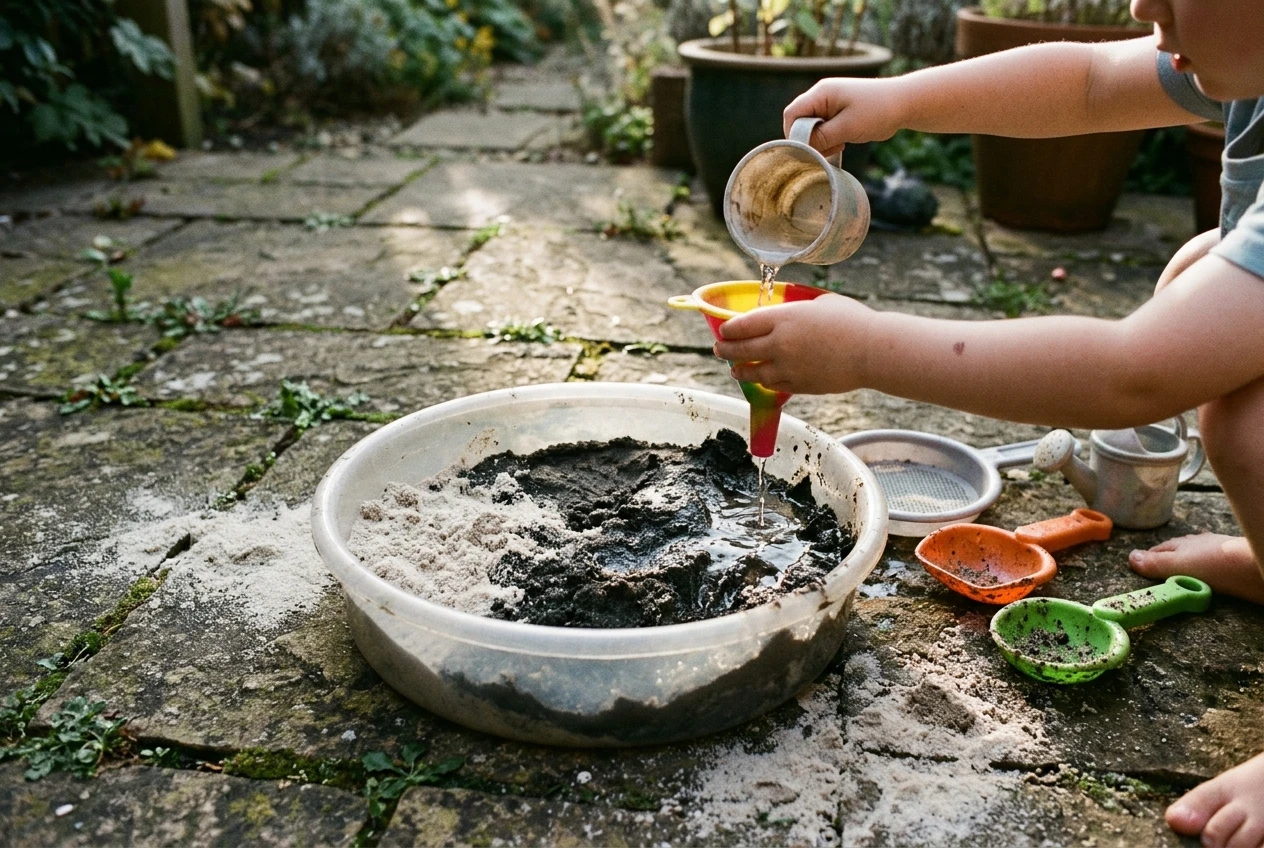
Sand and similar materials teach different lessons. Dry sand pours, wet sand holds a shape, and a child can feel the difference. Scoops, funnels, sieves and small buckets turn this into an experiment: which holds more, which empties faster, why does the sieve let some things through and not others.
Magnets are a good fit for the “why” stage because they do something a child cannot see an explanation for. A magnet wand and a tray of items lets a child sort things into “sticks” and “does not stick”, which is a real scientific test. Choose products made for young children, with magnets sealed inside and not loose. Small loose magnets can cause serious harm if swallowed, so keep any high-powered magnet sets well away from this age group.
Magnifying glasses and simple observation tools suit children who like collecting leaves, stones and insects. A sturdy, child-sized magnifier gives a reason to look closely at something ordinary.
When your child asks why something happened, you do not need the full scientific answer. “What do you think?” and “Let’s try it again and see” keep the experiment going and keep the toy in use.
Engineering Toys: Blocks, Trains And Building that Falls Over
Engineering at this age means building something, watching it fail and building it differently. The falling over matters. A tower that collapses teaches more about balance than one that never does, so toys that make failure easy and cheap to recover from are the right ones.
Blocks are the most dependable choice. Wooden unit blocks, interlocking bricks and magnetic tiles each teach something slightly different. Wooden blocks teach weight, balance and symmetry.
Interlocking bricks allow more complex, stable structures. Magnetic tiles let children make large shapes quickly and work in two and three dimensions. One mid-sized set is typically better than several small ones, because children need enough pieces to carry out a plan.
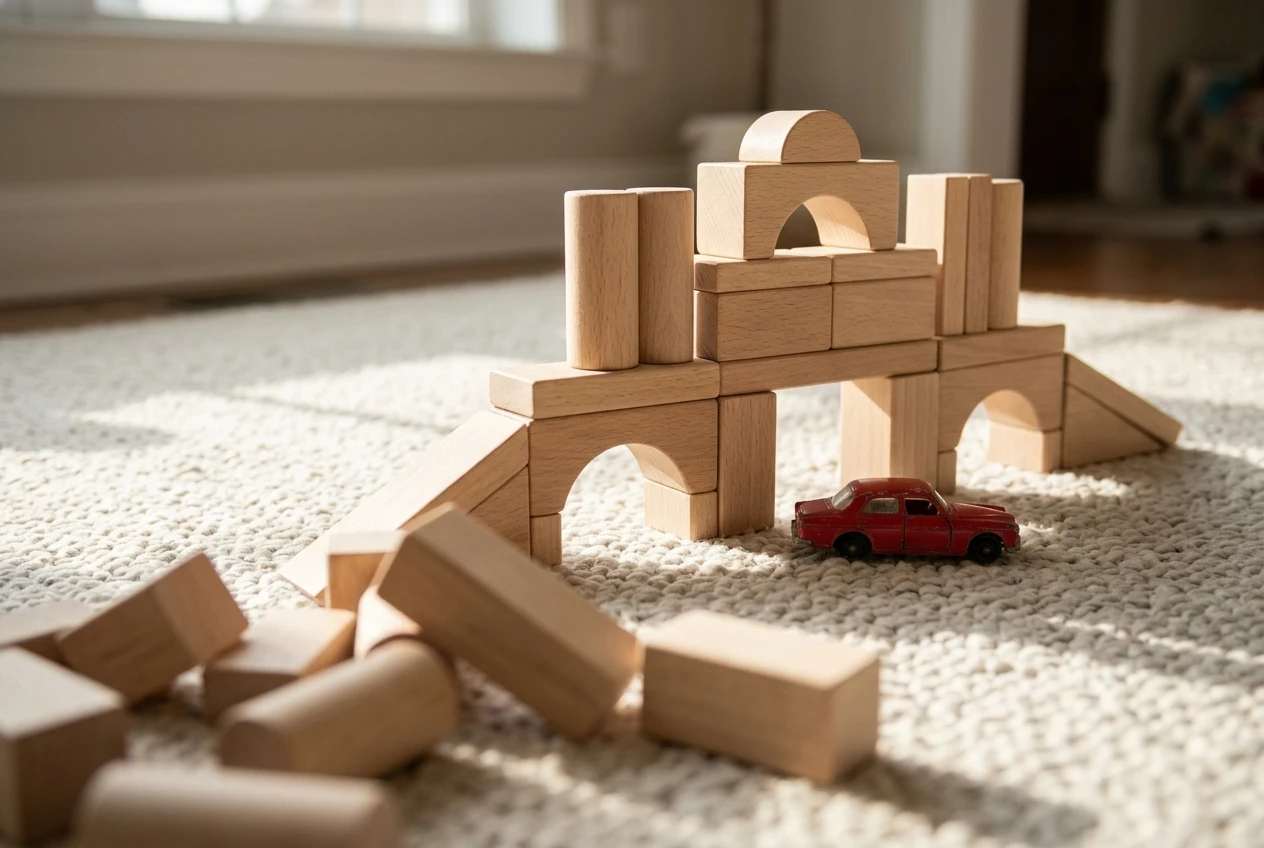
Train sets and tracks give a building problem with a goal: connect the track so the train can get from one place to another. The child has to deal with curves, joins, bridges and gradients. If your child likes trains, the guide to choosing a wooden train table set goes into the practical details of surfaces, storage and track compatibility.
Ramps and marble runs add a second layer. Once children can build, they start asking how to make a ball go faster, slower or further. Changing the slope of a ramp and watching the result is a simple physics experiment, and it needs nothing more than a few boards and a ball.
Construction with household items deserves a place on the list. Cardboard boxes, tubes, tape and blunt-ended scissors let a child build things that no set contains. Keep a box of this material next to the formal toys and watch which gets used more.
For all of these, resist the urge to build for the child. Offer a challenge instead: “Can you make a bridge the car can go under?” Then let them work it out, including the part where it falls down.
Maths toys: sorting, counting and patterns in everyday play
Early math is about quantity, comparison, shape and pattern. Children build these ideas through handling objects, long before written numbers mean anything to them.
Sorting sets are the most useful starting point. Anything with variation in color, size or shape works: bears, buttons, large beads, pom-poms, wooden shapes. Ask the child to sort by one rule, then by a different one. Switching rules is a real piece of mathematical thinking.
Counting materials work best when they are things the child wants to handle. Counting toy animals into a barn, cars into a car park or carriages on a train gives the number a meaning. A child who counts to ten by memory is reciting. A child who counts ten cars and notices that one is missing is doing math.
Pattern toys such as large beads, coloured blocks and pegboards let children make sequences (red, blue, red, blue) and then extend or fix them. Most children can handle simple two-color patterns by about four or five, though the age varies from child to child.
Measuring and comparing also count. Nesting cups, balance scales and containers of different sizes introduce “more”, “less”, “heavier” and “lighter”. A simple balance with a few objects to weigh can hold a child’s attention for a surprisingly long time.
Puzzles and shape toys build spatial reasoning. Jigsaws with large pieces and shape-fitting boards ask the child to rotate and match, and a progression from four-piece to twelve-piece puzzles gives a natural way to keep the challenge going.
A practical point on math toys: many of the best ones are already in the house. Muffin tins, buttons, bottle tops and a bag of dried pasta can cover sorting, counting and patterns for free. A bought set is worth it when it is better made, more durable or more appealing than what you can improvise.
Technology without a screen: simple machines and cause and effect
For a preschooler, technology means tools and mechanisms: things that do a job when the child operates them. Understanding that a lever lifts, a wheel rolls and a pulley raises is a better foundation than any app.
Simple machines are the main category here. Look for:
- Wheels and axles, as in push cars, carts and anything the child can roll along a surface.
- Ramps, which show how slope changes speed.
- Levers, such as seesaw toys or a spoon catapult used with soft pom-poms.
- Pulleys, found in basic bucket-and-rope sets for sand play or a small outdoor hoist.
- Gears, via large chunky gear sets that the child can turn by hand and watch mesh.
Cause-and-effect toys are useful for the younger end of this age range. Pop-up toys, switches, latches and locks on a busy board teach that a particular action leads to a particular result. Choose ones where the child makes the mechanism work by hand, since that is where the learning is.
Role-play with real tools adds another dimension. A toy tool bench, a child-safe screwdriver set with large screws, or a play kitchen with working knobs and doors lets children copy how adults use tools. They are learning that tools have purposes and that tasks have an order.
If a toy does include electronics, such as a simple programmable floor robot, ask whether it makes the child plan a sequence or just reacts to a button. The first kind introduces early logic. The second is mostly entertainment. Neither is wrong, but only one belongs under the technology heading.
Safety and age checks for small parts and materials
A toy that teaches well still has to be safe for the specific child using it. A few checks apply to nearly every purchase.
- Read the age label. It reflects the manufacturer’s safety testing. If there are younger siblings in the house, check the label against the youngest child, not the oldest.
- Check for small parts. Anything small enough to fit inside a toilet paper tube can be a choking risk for under-threes, and some preschoolers still mouth objects. Count the pieces in loose sets and decide whether they suit your household.
- Inspect magnets and batteries. Magnets should be fully enclosed, and battery compartments should close with a screw so a child cannot open them. Button batteries and loose magnets are among the most dangerous things a small child can swallow.
- Look at the material. Wood should be smooth and finished with a child-safe paint or coating. Plastic should feel solid and not brittle, with no sharp moulding edges.
- Check for the safety marking required where you live, and be cautious about unbranded products from unfamiliar sellers with no listed safety information.
- Supervise water, sand and anything involving cords. Cords and strings can be a strangulation hazard, so keep them short or supervise closely.
Hand-me-downs and second-hand toys need the same checks, plus a look for cracks, loose parts and worn-off paint.
How to rotate toys so STEM play keeps going at home
A full shelf makes it harder for a child to settle on anything. Rotation fixes this without spending anything: keep a small selection out and store the rest.
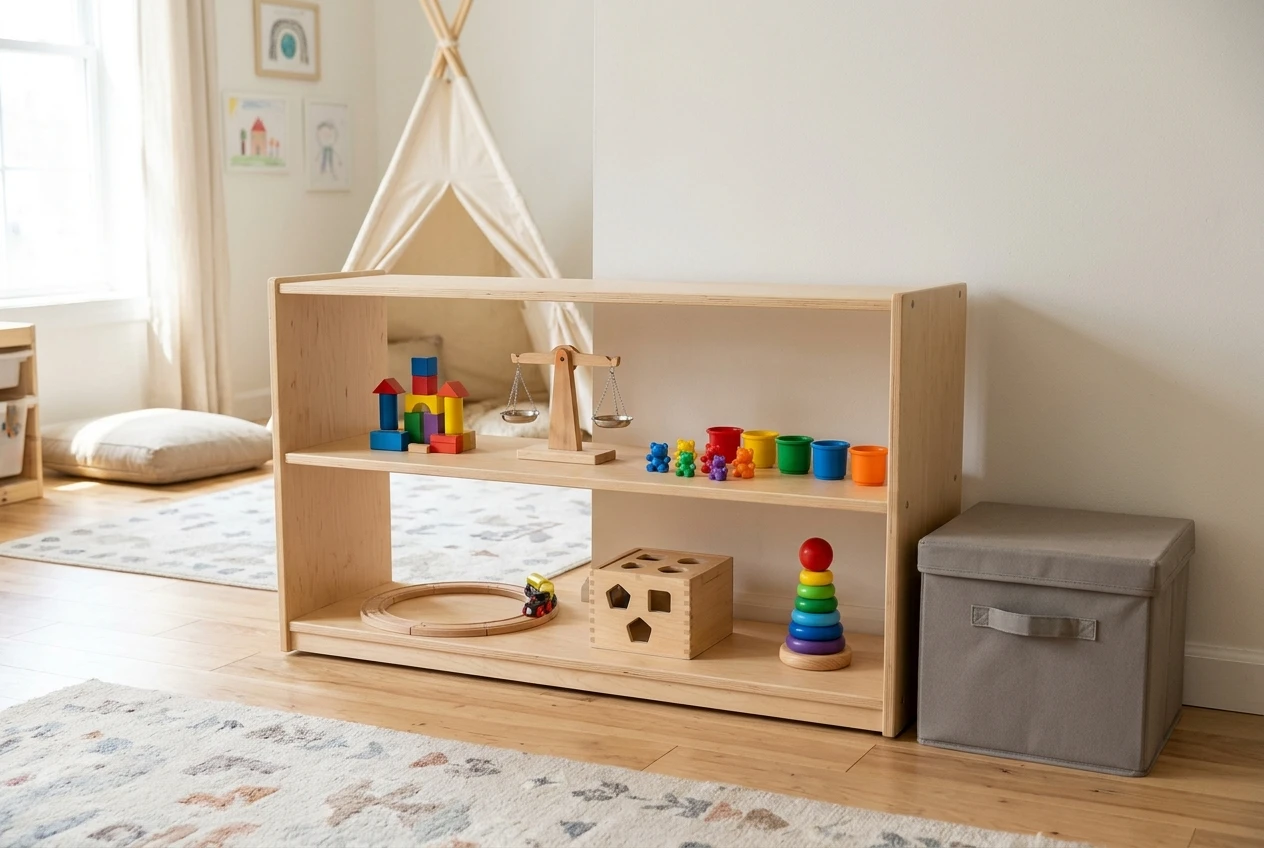
A simple system:
- Put out six to eight toys that cover a mix of building, sorting, pouring and pretend play.
- Store the rest in a closed box or cupboard where the child cannot see them.
- Swap a few toys every one to two weeks, or sooner if the child loses interest. Bring something back after a gap and it often feels new.
- Watch what gets used. If a toy is ignored across two or three rotations, it may not suit the child, and it can be passed on or saved for later.
Combining toys also extends their life. Put the blocks with the train track, or the sorting bears with the water table, and a single toy turns into a new activity. A suggestion from you helps: “Can the animals cross a bridge to get to the water?” One question like that can start half an hour of play.
When you do want to buy something new, use the earlier questions as a filter. Pick the gap in the rotation, whether that is something to build with, something to pour or something to sort, and fill that one gap well. That is how a small collection ends up serving as the best STEM toys for preschoolers in your own house, because each toy has a job and a child who wants to use it.
Browse the toddler and preschool toy guides on the site, starting with the safe and interactive educational toys guide.