The best stacking toys for toddlers are chunky blocks and nesting cups for most 2 year olds. Ring stackers suit younger toddlers, and balancing sets suit children who already stack with confidence. Pick pieces too large to swallow, with smooth edges and a stable base. If you are buying one toy, start with a set of simple blocks.
What makes a stacking toy worth buying for a toddler?
A good stacking toy lets a toddler succeed quickly and then gives them something harder to try. Most of the difference between a toy that gets used for a year and one that sits in a basket comes down to a few features you can check before you pay.
- Pieces a small hand can hold. A toddler grips with the whole palm. Pieces that are chunky and easy to pick up get stacked, while fiddly ones get dropped and abandoned.
- A stable result. Flat tops and bottoms, or a base that stays put, mean a tower stands when it is built. Rounded or uneven pieces collapse, which is fun for a few minutes and discouraging after that.
- More than one way to play. Cups that nest, stack, scoop and pour get more use than a toy with a single correct arrangement.
- Room to get harder. A set with a few sizes or shapes lets the same toy stay interesting as your child improves.
- Durability. A toddler will throw, chew on and sit on the toy. Look for solid construction with no thin edges, loose parts or flaking paint.
A set with too many pieces is a common mistake. Eight to twelve well-made pieces are easier for a toddler to manage than forty, and easier for you to tidy.
Are wooden stacking toys better than plastic ones?
Neither material is better across the board, and each has a clear strength. Wood is heavier and steadier, so towers stay up and a clumsy bump does not knock them over. Plastic is lighter, easier to wash and works in the bath or sandpit.
Wooden blocks and ring bases tend to hold up well to repeated dropping, and their weight gives a toddler useful feedback about balance. They are also quieter to build with than hard plastic.
The drawback is that wood can chip or splinter if it is poorly made, and most wooden toys should be wiped clean rather than soaked.
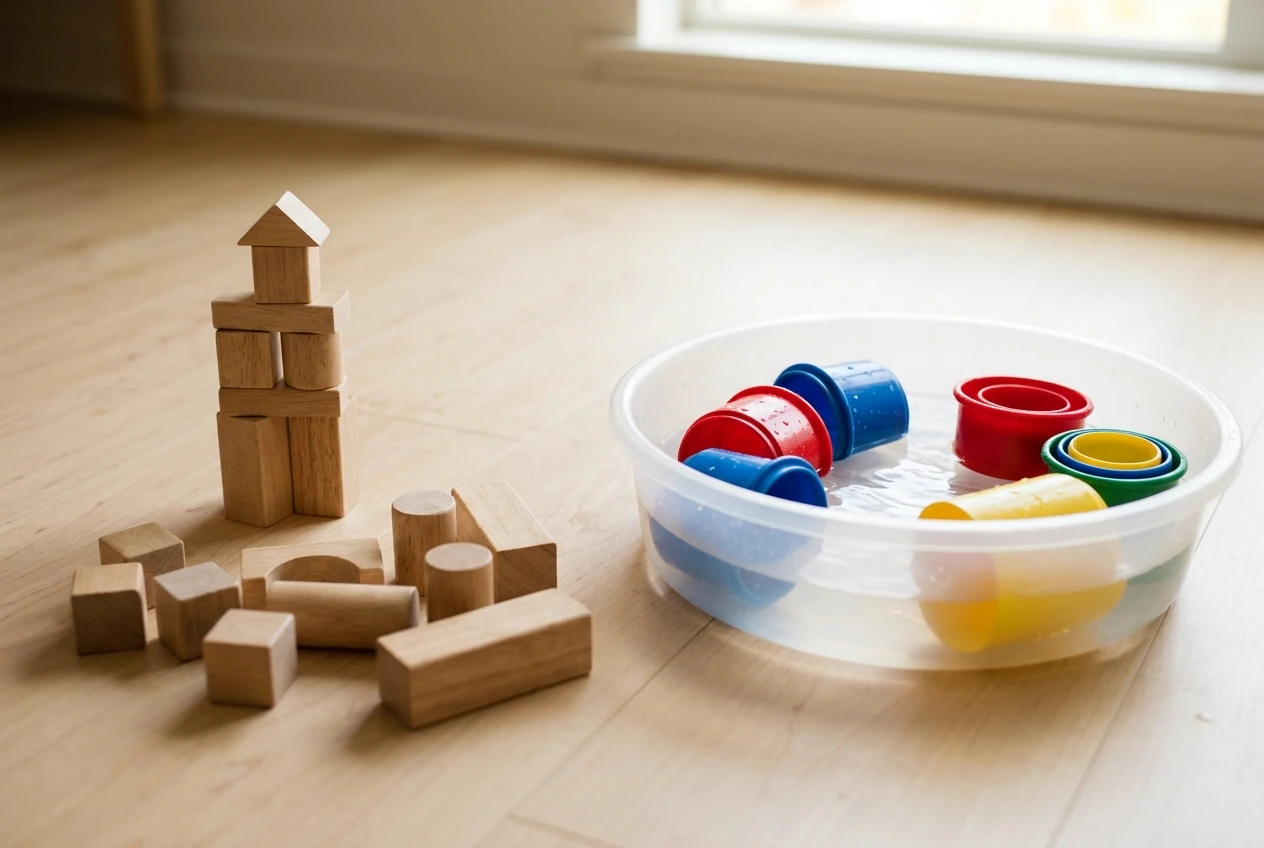
Plastic nesting cups are the practical choice for water play, since they can go in the bath, the paddling pool or the dishwasher if the label allows it. Light cups are also easier for small hands to lift. Check them for cracks over time, because brittle plastic can break into sharp pieces.
A sensible split is wooden blocks for the playroom floor and plastic cups for messy or wet play. Whichever material you choose, the construction and the safety labelling matter more than the material itself.
Which type of stacking toy suits a 2 year old best?
For most 2 year olds, blocks and nesting cups are the best fit, because both are easy to start with and have plenty of room to get harder. Ring stackers are generally aimed at younger toddlers, and balancing sets suit a child who already builds steady towers. Children develop at different speeds, so treat the table below as a guide rather than a rule.
Type What your child does Fit for a 2 year old What to watch for Ring stackers Slide rings onto a central post, usually in size order Good for younger toddlers; a 2 year old may find it too simple within a few weeks Post should be fixed and blunt; rings need a wide hole so they slide on easily Nesting cups Stack cups into a tower, nest them inside each other, scoop and pour Very good; works at several skill levels and doubles as bath or sand toy Cups should be sturdy and not too small; check for cracks in plastic Blocks Build towers, rows and simple structures Best all-rounder; most children can stack a few blocks and then build up Choose simple shapes and a size that cannot be swallowed; avoid sharp corners Balancing sets Place uneven or shaped pieces so they stay balanced Better for a child who already stacks well; can frustrate a beginner Needs patience; pieces are often smaller and harder to place
Ring stackers
A ring stacker asks for one action: put the ring on the post. That makes it a reliable first toy for a young toddler. A 2 year old often masters it fast, although some children enjoy taking the rings off and rebuilding in a different order, or using the rings as bracelets and wheels.
Nesting cups
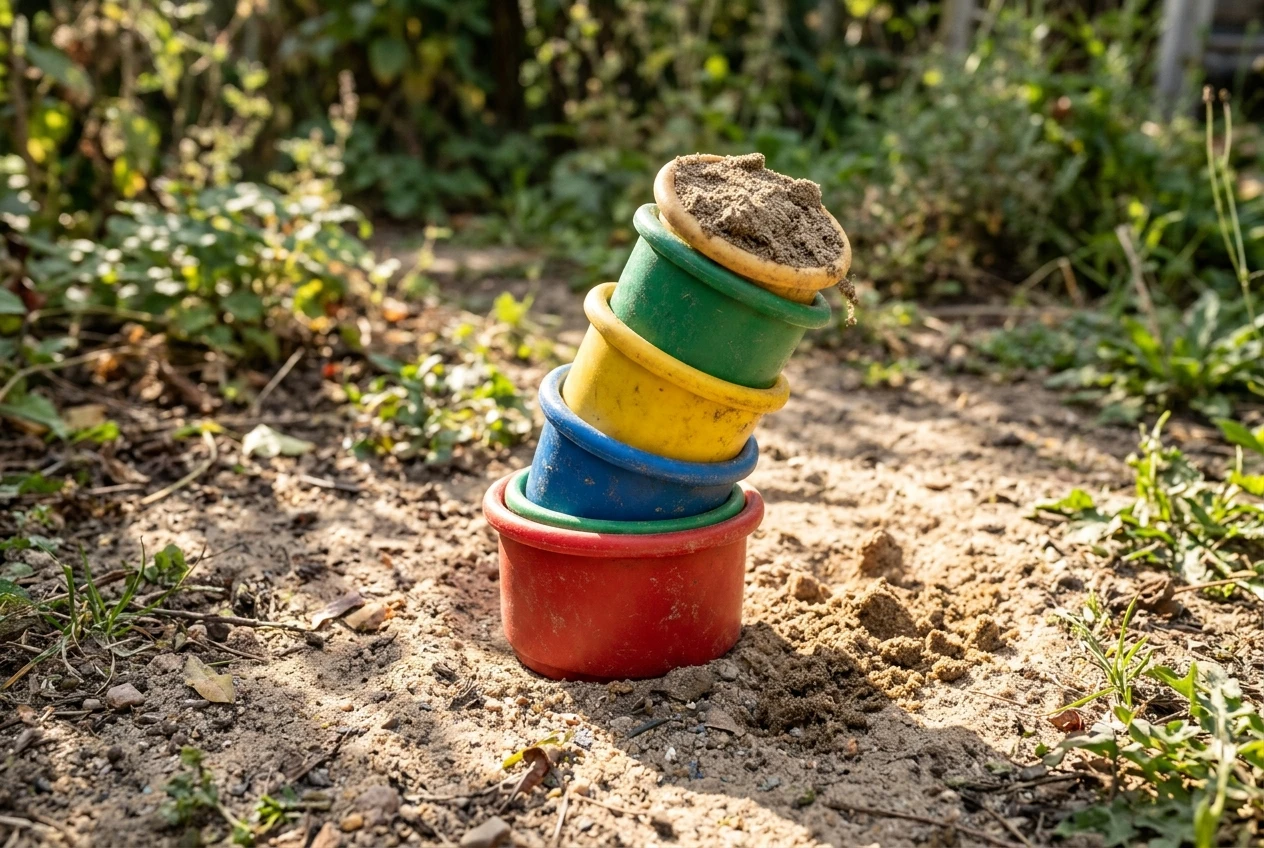
Cups have the widest range of uses. A younger toddler can simply knock a tower down, while an older one can sort sizes and nest the whole set. Because cups hold things, they carry over into pretend play, bath time and sand play.
Blocks
Blocks are the most open-ended type. A child can stack, line up, sort by colour, build a wall or make an enclosure for toy animals. They suit a 2 year old well because the child sets the difficulty, and the same set stays useful through the preschool years.
Balancing sets
Balancing sets use curved, angled or irregular pieces that have to be placed with care. They reward a steady hand and some patience. For a child who has outgrown simple towers, they are a good next step, but they are a poor first stacking toy.
What should you check for safety before you buy?
Check the age label first, then the size of the pieces, the finish and the construction. Most stacking toys are safe when they are made well and matched to the right age, but a few checks are worth making every time.
- Age grading. Look for an age range that includes your child. Toys meant for children over 3 often contain smaller parts.
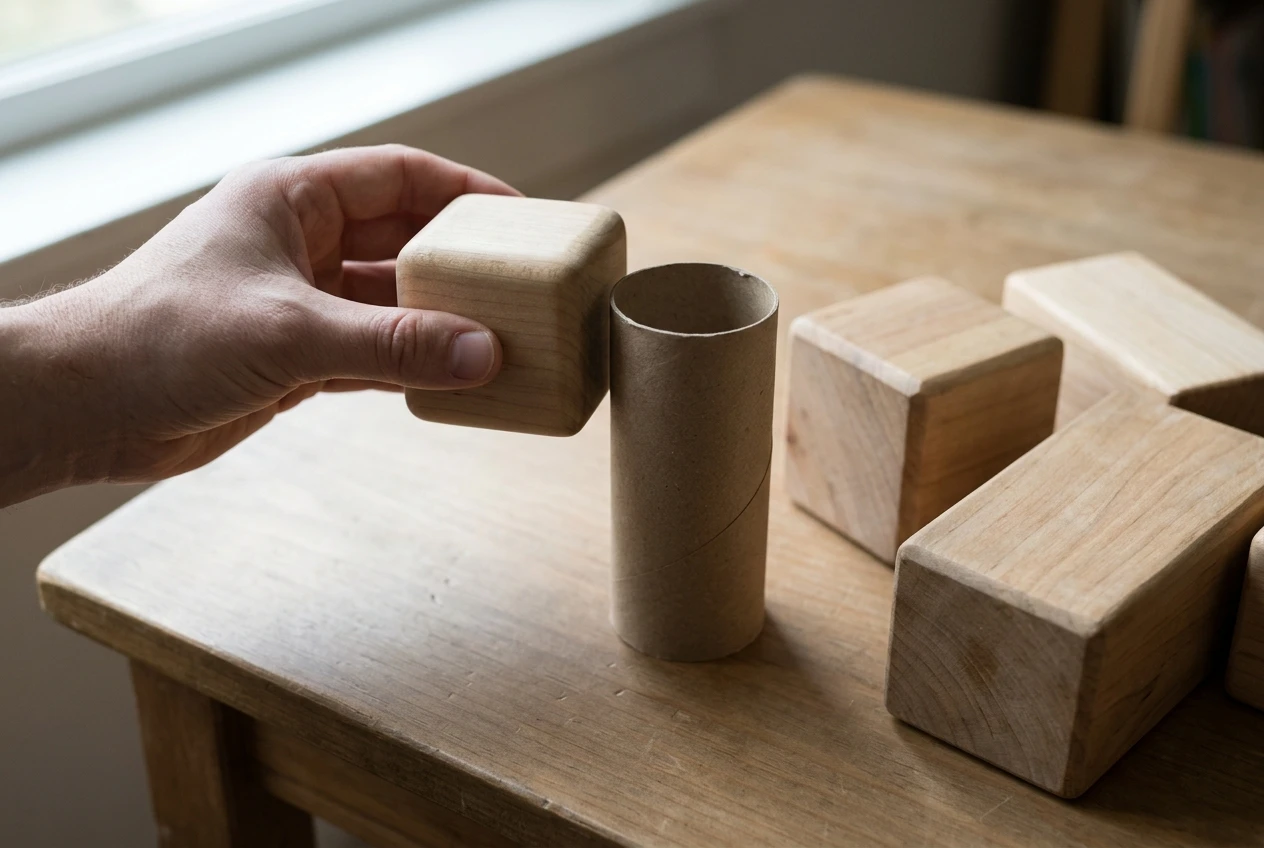
- Piece size. Anything small enough to fit inside a toilet paper tube is a choking risk for a child who still puts things in their mouth. This applies to loose beads, small balancing pieces and any part that can detach.
- Safety standards. Check the packaging or product page for a recognised toy safety standard for your region, such as ASTM F963 in the United States or EN 71 in Europe.
- Finish. Paint and varnish should be labelled non-toxic, and the colour should not rub off on a damp cloth. Toddlers chew on blocks.
- Edges and surfaces. Run a hand over each piece. Corners should be rounded and the surface smooth, with no splinters or rough seams.
- Fixed parts. On a ring stacker, the post should be firmly attached and have a rounded top. Nothing should come loose when you pull on it.
- Condition over time. Check wooden pieces for chips and plastic ones for cracks every few weeks. Retire any piece that has broken.
If a product listing does not state the materials, finish or age range, treat that as a reason to look at another toy.
How do you match a stacking toy to your child’s stage?
Watch what your child does with objects now, and choose the toy that sits slightly ahead of that. Ages are approximate, and a child can be ahead in one skill and behind in another.
- Mostly knocking things down and mouthing pieces. Choose large, light nesting cups or a simple ring stacker. The goal is handling and cause and effect, so expect more demolition than construction.
- Placing one item on another. Choose chunky blocks or cups. Many children reach this point around the second year, and a few blocks are enough.
- Building towers of several pieces and enjoying repeating them. Choose a larger block set, or cups that can also be nested and sorted by size.
- Building steady towers and trying shapes or patterns. Choose a balancing set or blocks in more than one shape.
If your child gets frustrated and walks away, the toy is probably too hard and a simpler one will help. If your child finishes quickly and loses interest, add pieces or move to the next type.
How do you get a toddler to actually play with it?
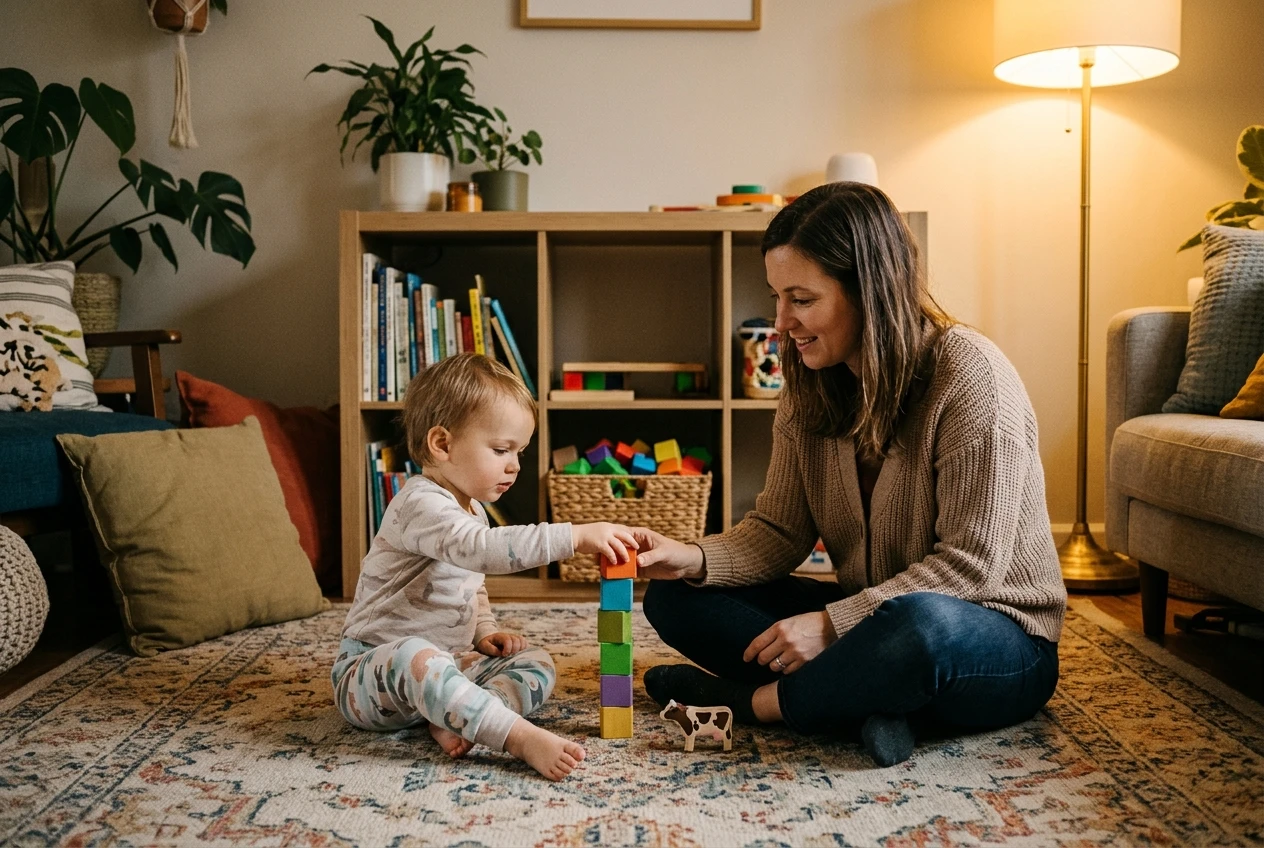
Sit down and build next to them for a few minutes without trying to direct the play. Toddlers copy what they see, and a short stretch of shared building does more than an instruction. Then step back and let them take over.
A few simple habits help:
- Offer a small selection. Put out four or five blocks or a few cups rather than the whole set. Fewer pieces are easier to manage and less overwhelming.
- Build a short tower and let them knock it down. Knocking down is part of the game, and it teaches cause and effect. Rebuild it and repeat.
- Add a goal that fits their level. Ask them to put a toy animal on top, or to build a “garage” for a car. A purpose gives the stacking a point.
- Rotate the toy. Put it away for a week and bring it back. A toy that has been out of sight often gets fresh attention.
- Keep it in reach. A low shelf or open basket is better than a closed box that a toddler cannot open on their own.
If your child is not interested, do not push. Try again in a few weeks, perhaps with a different type of toy.
Which stacking toy should you buy first?
Buy a set of simple, chunky blocks. They suit the widest range of 2 year olds, they get used for stacking, sorting and pretend play, and they remain useful for years. Pick pieces in basic shapes such as cubes and rectangles, with smooth edges and a finish labelled non-toxic.
Choose nesting cups instead if your child is younger than two, if you want something for the bath or sandpit, or if your child tends to get frustrated when towers fall. They are forgiving and work at several levels. Add a ring stacker or a balancing set later, once you can see how your child plays.
If you would rather browse more wooden options before deciding, the roundup of educational wooden learning toys for toddlers covers a wider range than stacking toys alone.
The best stacking toy is the one your child picks up again and again, so a simple, well-made set that matches their stage will serve better than a larger or more complicated one.
Read how stacking toys build spatial awareness in toddlers to see what your child gains from the toy you pick.