Sensory bins vs tactile toys comes down to how your child reacts to touch and mess. Choose a sensory bin for a child who digs in and wants more texture. Choose a tactile toy for a child who hesitates at messy hands or needs a contained, repeatable texture. Either can change as your child’s comfort grows.
What is the difference between a sensory bin and a tactile toy?
A sensory bin is a container filled with loose material that a child digs through, scoops, pours and buries things in, while a tactile toy is a finished object with built-in textures to feel, press, pull or trace. The bin is open-ended and changes every time you refill it. The toy stays the same, and the texture is fixed to it.
A typical bin holds a base such as dry oats, rice, cooked and cooled pasta, sand, or water, plus scoops, cups and a few objects to find. The child decides what happens next, and the material ends up on the floor, in sleeves and sometimes in hair.
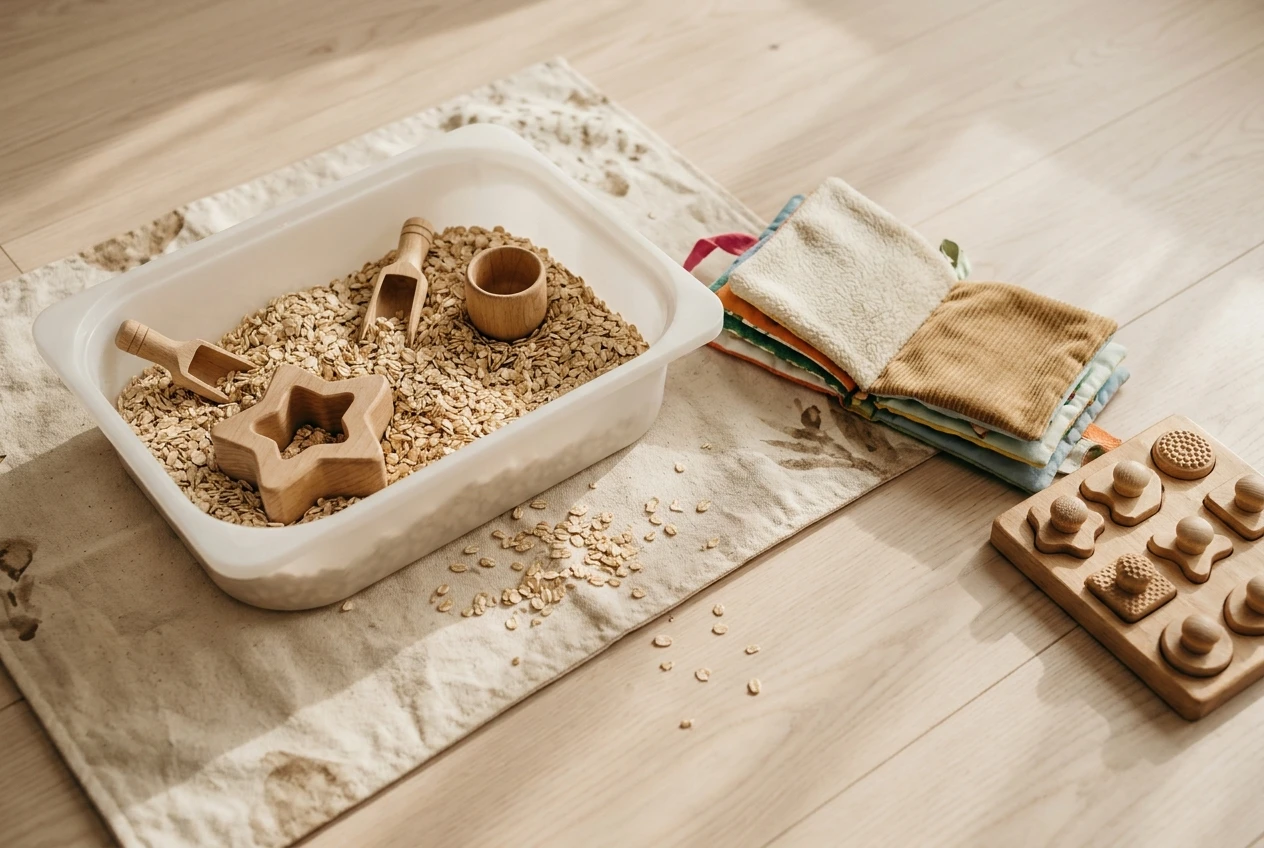
Tactile toys cover a wide range:
- Textured balls and soft fabric books with crinkle, fuzzy or ribbed panels
- Wooden puzzles with different surfaces
- Stacking and sorting toys with bumps, ridges or grooves
- Fidget-style toys with things to squeeze, slide and press
- Texture boards or tiles that a child runs fingers across
The key difference for a parent is control. A tactile toy offers one texture at a time on the child’s terms, with no cleanup. A bin offers many textures that move, and what the child touches is less predictable.
What does each one build in a child’s development?
A sensory bin builds hand strength, scooping and pouring skills, and language for describing what things feel like, while a tactile toy builds fine motor precision and gives a child steady, repeatable touch input. Both involve the hands and attention, but they exercise different things.
What a sensory bin offers
Scooping, pouring, burying and digging use the whole hand and wrist. A child who fills a cup, tips it into another and watches the material fall is practicing coordination and early ideas about volume and capacity. Hiding small figures or large wooden shapes in the base adds a searching game that holds attention.
Bins also invite talk. Words like gritty, smooth, heavy, dry, wet, pour and full come up naturally, and you can supply them as your child plays. Pretend play grows out of bins too: a bin of oats becomes a farm, a bin of sand a construction site.
What a tactile toy offers
Most tactile toys ask for a specific action: pinch the knob, trace the groove, press the button, match the textures. That repetition practices grip and finger control. A fabric book or textured ball also lets a younger toddler explore touch without any muss.
A tactile toy can be carried in a bag, used in a car seat and picked up for thirty seconds. A bin needs a floor, a mat and your attention. That practical difference often matters more than the developmental one.
Which is better for a child who avoids messy textures?
For a child who pulls back from sticky, wet or gritty textures, start with a tactile toy, because it lets them touch on their own terms and stop whenever they like. Forcing hands into a bin of unfamiliar material usually makes the avoidance stronger.
Signs of mess avoidance are easy to spot. A child may wipe their hands right after touching something damp, refuse to touch finger paint, grimace at certain foods, or watch other children dig in without joining. None of this means anything is wrong. Toddlers differ a lot in how much touch they enjoy.
A gentle path from toy to bin looks like this:
- Begin with a tactile toy that has a texture your child already tolerates, such as soft fabric or smooth wood.
- Add one slightly different texture, such as a ridged or bumpy surface, and let your child choose when to touch it.
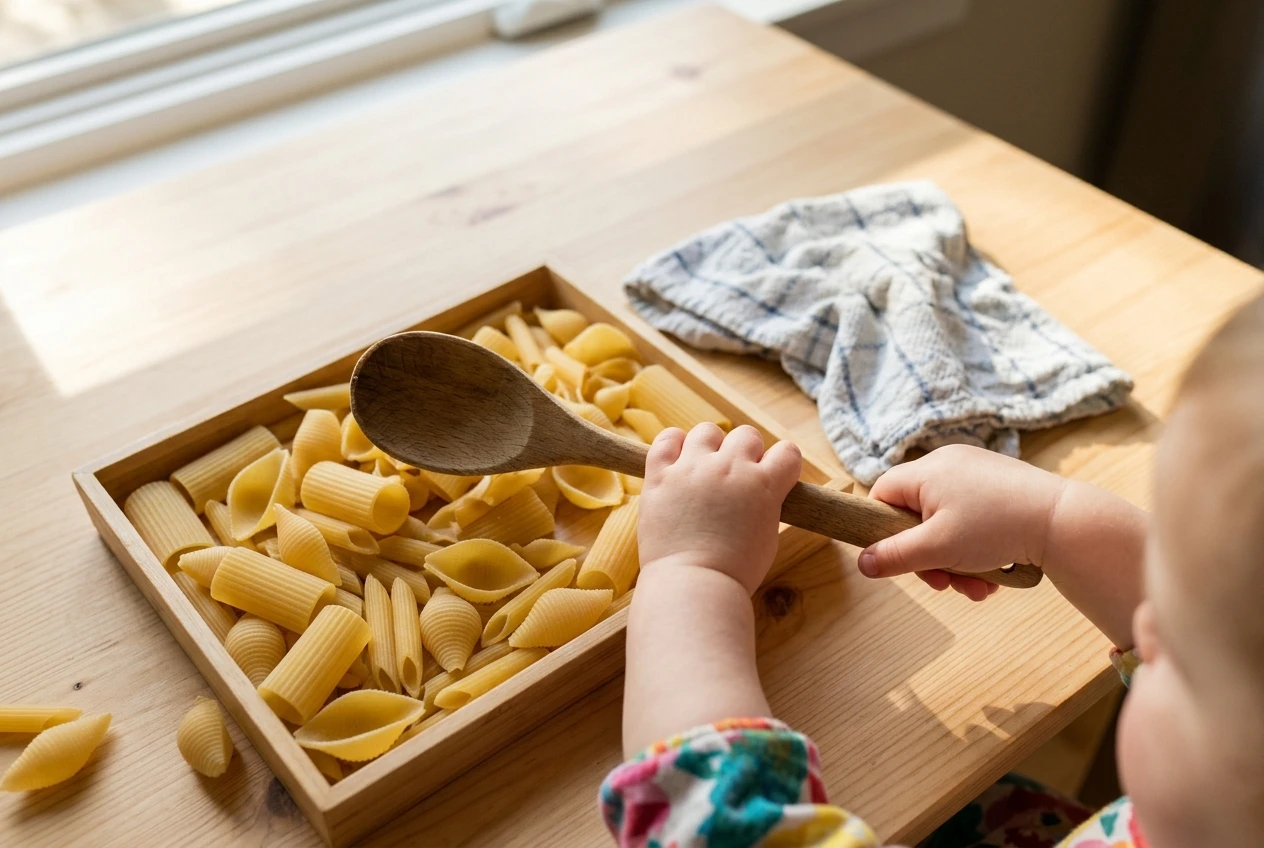
- Introduce a very dry bin base, like a shallow tray of large dry pasta shapes, with a scoop so hands do not have to touch directly.
- Let your child use tools first. Many hesitant children warm up to touching only after they have scooped for a while.
- Keep a damp cloth or towel next to the bin so they can wipe their hands whenever they want.
Do not push past a clear no. If the avoidance is strong and also affects eating, dressing or handwashing, mention it to your pediatrician, who can tell you whether an occupational therapist might help.
Which suits a child who craves mess and constant touch?
A child who seeks out mess, mouths and squeezes everything and keeps reaching for new textures usually does better with a sensory bin, because a bin gives their hands a lot of varied input in one place. Tactile toys can still help, but they may feel too limited.
You will recognize this child. They dump the laundry basket to feel the clothes, put their hands in the bathwater to splash and run fingers through every spill. Giving that urge an approved container saves the couch cushions and the dog’s water bowl.
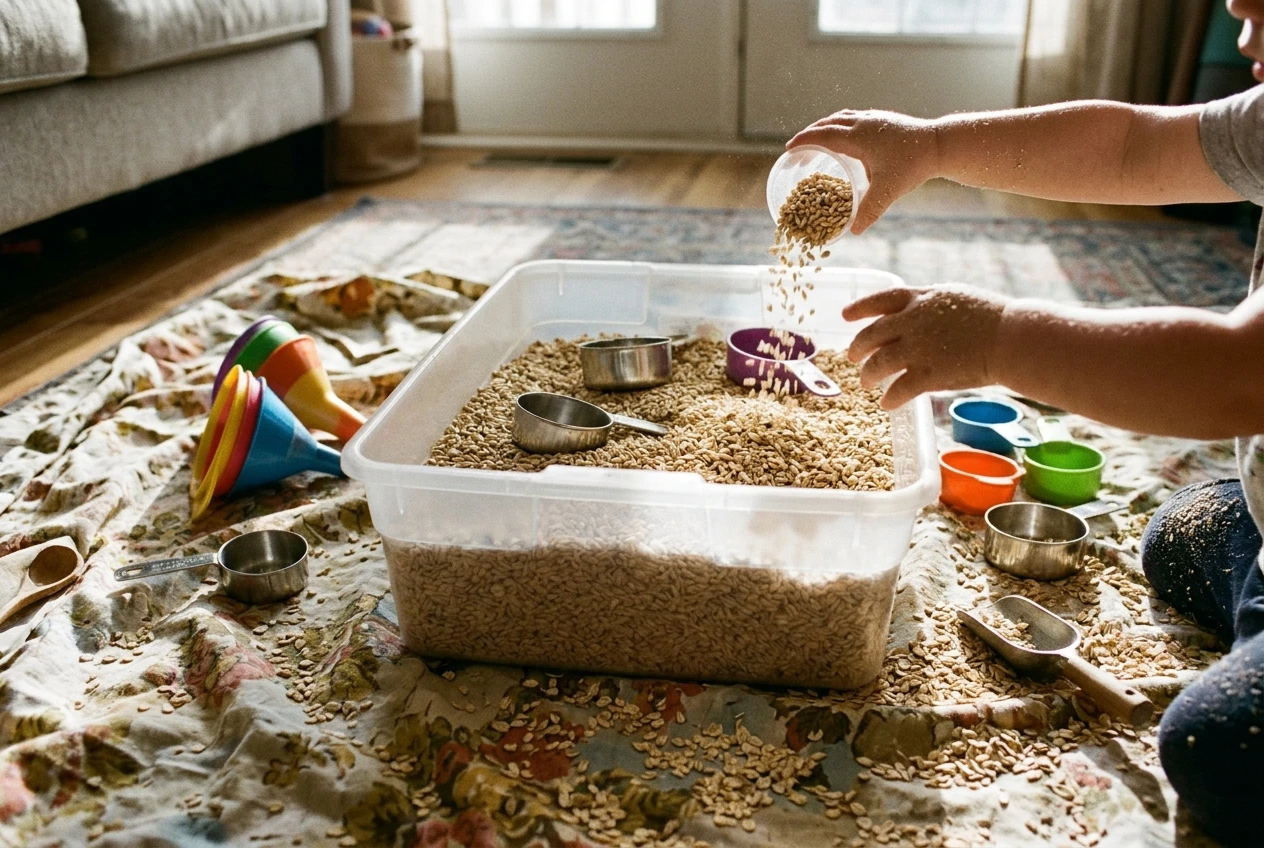
A few habits help a bin work for a child who loves mess:
- Put the bin on a tray, a washable mat or an old sheet so the edges are defined.
- Use a bin deeper than a baking tray so material stays in more often.
- Offer scoops, funnels and cups so the play has something to do besides throwing.
- Set a simple rule, such as “the oats stay in the bin,” and stop the activity calmly if the rule is broken a few times.
- Rotate the base every week or two, so the bin stays interesting without needing more toys.
A tactile toy still has a role for this child. A texture board or fabric book is a good quiet option for times when a bin is not practical, like waiting rooms and car rides.
How do sensory bins and tactile toys compare side by side?
Side by side, the two differ most in mess, setup, flexibility and how well they suit a hesitant or an eager child. This table lays out the main differences so you can match them to your own child and home.
Factor Sensory bin Tactile toy Mess level Moderate to high; material spreads Low to none Setup and cleanup Needs a base, tools, a mat and tidying Take it out and put it away Textures offered Many, and they change with the base One or a few, fixed Best for a child who avoids mess Only with tools and gradual steps Good starting point Best for a child who craves mess Strong fit Limited, works as a supplement Main skills Scooping, pouring, hand strength, language, pretend play Grip, finger control, matching, steady touch Supervision needed Constant, especially with mouthers Less, but check for small parts Portability Low High Cost to maintain Base materials need refreshing One purchase, no refills Lifespan Adapts as the child grows Child may outgrow the single action
Read the table against your child’s habits rather than counting rows. A child who needs low mess and portability points to the toy, even if you like the idea of a bin.
How do you keep a sensory bin safe for a toddler who mouths everything?
Keep a bin safe for a toddler who mouths things by choosing edible or very large materials, removing anything small enough to swallow and staying within arm’s reach the entire time. Supervision matters more than any filler choice.
Start with the base. For a child who tastes everything, use materials that will not cause harm if a bit goes in the mouth, such as cooked and cooled plain pasta, dry oats or plain water with large cups. Check for allergies first: oats, wheat pasta and some other pantry items can be allergens, so match the base to what your child already eats.
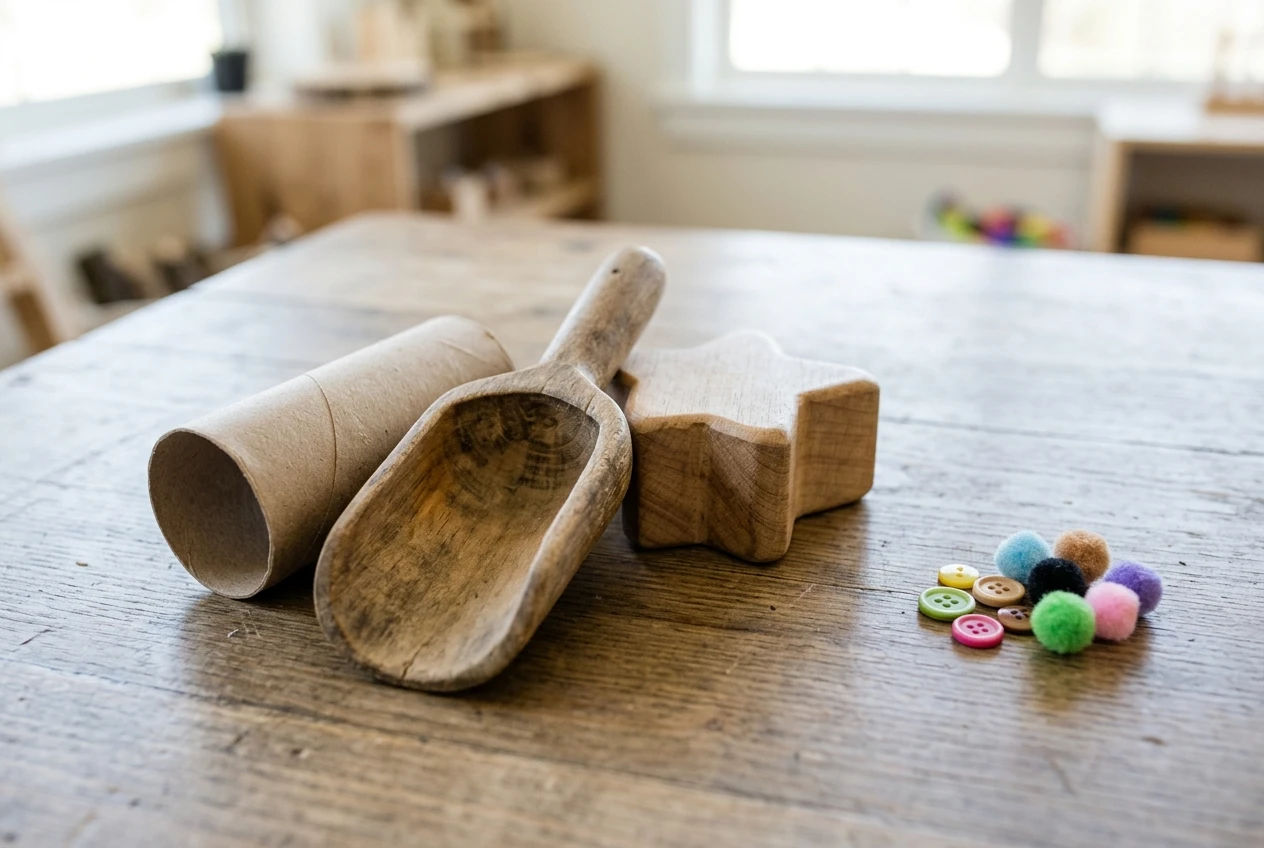
Some materials do not belong in a bin for a mouther. Water beads are a known swallowing hazard, and small beads, buttons, pom-poms, coins and tiny figures can block an airway. As a general rule, toys for children under three should not contain parts small enough to fit through a toilet paper tube, so test your scoops and objects that way.
Practical safety habits:
- Stay seated beside the bin, not in the next room.
- Use a shallow bin so a child cannot lean in headfirst.
- Choose scoops and objects bigger than the child’s fist.
- Discard bases that get wet, moldy or contaminated, especially food-based ones.
- Store the bin out of reach so it only comes out when you can watch.
- Wash hands before and after.
If you are shopping for tactile toys instead, the same small-parts check applies. Our guide to safe, interactive educational toys for toddlers covers what to look for before buying.
How do you start with one without buying both?
Start with whichever option matches your child’s reaction to touch, and use things you already own before spending anything. A watch-and-see week will tell you more than any product description.
For a week, notice how your child behaves around everyday textures. Do they stay with the bath toys for ages or ask to get out? Do they dig into the flour when you bake or step back? Do they pick up a fuzzy blanket, or avoid it? Jot down what they reach for and what they avoid.
Then act on what you saw:
- Mostly hesitant: choose one tactile toy with a texture they already accept, and add new ones slowly.
- Mostly eager: set up a small bin with dry oats or cooked pasta, a few large scoops and two or three big objects to find.
- Mixed: pick a tactile toy for daily use and a tray bin for occasional supervised play.
A homemade starter bin costs almost nothing. A plastic storage tub, a cup, a large spoon and a pantry base are enough. If your child ignores it after several tries, you have not lost much, and you learned something about their preferences.
For gifts, the same logic helps. If you do not know the child well, a tactile toy is the lower-risk choice, since it creates no mess for the parents and needs no extra supplies. If you know the child loves digging and pouring, a bin kit with large tools and objects makes a good present.
Ready to pick?
Ready to pick? See our reviewed educational learning toys for toddlers and preschoolers.